


Small and simple ideas to spark the season
The Art of Gratitude: Harvest, Light & the Coming Winter
 Finding abundance in nature, celebrating togetherness, and preparing for the quieter days ahead.
There is something special about November. It is a month that seems to invite us to slow down, look around, and notice what we might otherwise overlook. In some parts of the world, trees are shedding their last golden leaves, gardens are becoming quiet, and the days are growing shorter. In other places, the air is still warm, the rains are lingering, and the earth is preparing for another season of growth. Yet, wherever we find ourselves, November offers a beautiful opportunity to observe nature, gather together, and reflect on the gifts that surround us. In Waldorf education, the changing seasons are more than a backdrop to the school year. They help establish a rhythm that children can experience through stories, songs, artistic activities, celebrations, and meaningful work. The natural world becomes a teacher, inviting children to observe, participate, and discover.And November has plenty to teach us. |
|
The little treasures we discover in nature can become invitations to wonder. A Basket Full of AbundanceImagine taking a walk through a garden or a nearby forest with a child. Instead of rushing toward a destination, give yourselves a little time to collect treasures along the way. Perhaps a particularly beautiful leaf, a fallen seedpod, an interesting stone, a feather, or a branch with an unusual shape. Each discovery can become the beginning of a conversation.Where did it come from? What might it have been before it fell to the ground? Which creatures might depend on this plant or tree? In the Northern Hemisphere, autumn is traditionally associated with the harvest and the gathering of the earth’s abundance. Apples, pumpkins, squash, nuts, and root vegetables remind us of the work that has taken place throughout the growing season. But abundance does not always look like a colorful autumn landscape.In tropical regions, the harvest may bring different fruits, flowers, and seeds. In Guanacaste, Costa Rica, for example, the seasonal landscape has its own rhythm. The changes in rainfall, the flowering of trees, and the appearance of tropical fruits offer children an entirely different way to experience the turning of the year.
A little Waldorf inspiration:Create a seasonal nature table with your children. Choose a cloth in warm autumn colors, arrange your collected treasures, and let the display evolve throughout the month. Add a small basket for seeds, leaves, and other natural discoveries.The purpose is not to create a perfect decoration. It is to make room for observation, wonder, and appreciation. |

|
Sharing food, preparing a meal, and gathering around the table are simple ways to celebrate gratitude and togetherness.
Thanksgiving: More Than Saying Thank YouIn the United States, November brings Thanksgiving, a holiday traditionally associated with gathering around a table and sharing a meal.Beyond the familiar traditions, this time of year gives us an opportunity to explore something much deeper with children: gratitude. Gratitude is not simply remembering to say thank you. It is learning to recognize the people, experiences, and small moments that make our lives richer.A child who helps prepare a meal begins to understand the effort behind it. A child who plants a seed and watches it grow discovers patience. A child who helps set the table or shares something with a friend experiences the pleasure of contributing. In Waldorf education, these everyday experiences are meaningful. Children learn through doing, observing, imitating, and participating in the life around them.A Thanksgiving Table With a StoryInstead of focusing only on the food, invite everyone to contribute something to the celebration. One person might prepare a favorite dish, another might arrange flowers, and the children could create handmade place cards or little decorations from natural materials. Here is a simple idea: The Gratitude BasketPlace a small basket in the center of the table with paper leaves cut from colored construction paper.Invite each person to write or draw something they appreciate. It could be a person, a favorite memory, a kindness received, a place in nature, or even something as simple as a sunny afternoon.Read the leaves together before or after the meal.For younger children, drawing a picture is just as meaningful as writing a sentence. Older children might enjoy writing a short note to someone they appreciate. By the end, the basket becomes a collection of little stories about the things that make a community. And perhaps the loveliest part is that no two baskets will ever be alike. |

|
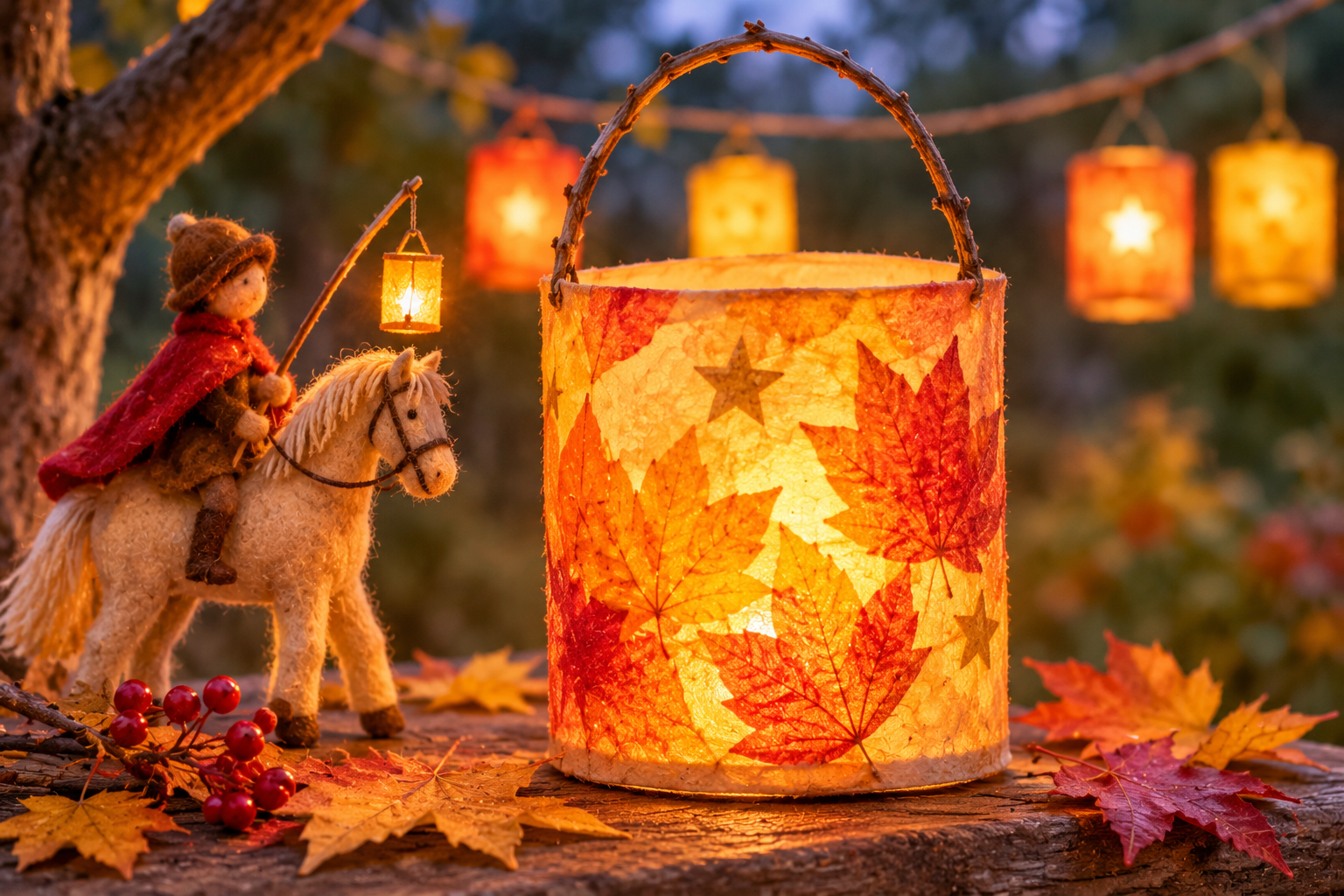
A little light can remind us of the warmth and kindness we can share with others.
The Gift of Giving: Martinmas and the LanternAs November progresses, another beautiful festival appears in the Waldorf calendar: Martinmas, celebrated on November 11. The story of Saint Martin of Tours tells of a young soldier who encountered a poor man shivering in the cold. Martin cut his own cloak in half and shared it with him.It is a simple story, but its message is powerful: sometimes the greatest gift we can offer is something we already have. In Waldorf schools, Martinmas is often celebrated with handmade lanterns and a walk into the early evening. The small lights carried by children create a beautiful image of warmth and kindness during a time when darkness is becoming more noticeable.The lantern is more than a craft. It becomes a symbol of the light we carry and share with others. Make Your Own Little LanternYou will need:
Brush a thin layer of glue onto the jar and carefully place small pieces of tissue paper over the surface. Overlap the colors to create a beautiful stained-glass effect. Once dry, add a handle and place a battery-operated tea light inside. At home or in the classroom, turn down the lights and enjoy the gentle glow together. You might tell the story of Martin, sing a lantern song, or simply take a quiet moment to appreciate the light. For a little extra magic, invite the children to make a lantern procession around the garden or through a safe outdoor path. |

|
Simple seasonal activities bring warmth, creativity, and a sense of rhythm to the quieter days of the year.
As the Days Grow Shorter:Preparing for WinterAfter the abundance of harvest comes a quieter time.In Waldorf education, the rhythm of the year helps children experience this transition gradually. The outdoor world may become quieter, but indoor life can become richer with storytelling, handwork, baking, music, and activities that bring warmth into the home and classroom. This is a wonderful time to introduce simple activities that invite concentration and creativity. Try finger knitting with colorful wool, baking a seasonal loaf of bread, making beeswax decorations, or creating small gifts for friends and family. These activities do not need to be elaborate. Their beauty often lies in the process itself: the feel of the wool between the fingers, the scent of bread in the oven, or the satisfaction of completing something with one’s own hands. As we approach the Advent season, many Waldorf communities begin preparing their nature tables, exploring stories of light, and creating a sense of anticipation.The transition from autumn’s abundance to winter’s quiet is not an ending. It is another part of the yearly rhythm. |

|
Sometimes the smallest things give us the most reasons to be grateful. A Little Challenge for This MonthHere is an idea for families and classrooms: Seven Days of Small Gratitudes.For one week, take a few minutes each day to notice something worth appreciating.
There is no need for elaborate preparations or special materials. The idea is simply to make gratitude part of everyday life.
A moment of beauty, a handful of flowers, and a reminder to appreciate the little things.
Carrying the Season With UsPerhaps this is what November reminds us of most: that abundance is not measured only by what we gather, but also by what we share. A fallen leaf, a warm meal, a handmade lantern, a helping hand, or a moment spent together can become a meaningful part of childhood. As educators and parents, we have the opportunity to create these experiences and allow children to discover their meaning in their own time. And as the light changes and a new season approaches, we can carry a little of that warmth with us.
May this November bring you moments of wonder, generous hearts, and plenty of little lights to share. |

