
November Inspiration

Small and simple ideas to spark the season 


The Art of Gratitude: Harvest, Light & the Coming Winter

Waldorf-inspired autumn nature table with a handmade lantern, harvest fruits, leaves and natural treasures.

Finding abundance in nature, celebrating togetherness, and preparing for the quieter days ahead.


There is something special about November. It is a month that seems to invite us to slow down, look around, and notice what we might otherwise overlook. In some parts of the world, trees are shedding their last golden leaves, gardens are becoming quiet, and the days are growing shorter. In other places, the air is still warm, the rains are lingering, and the earth is preparing for another season of growth. Yet, wherever we find ourselves, November offers a beautiful opportunity to observe nature, gather together, and reflect on the gifts that surround us.

In Waldorf education, the changing seasons are more than a backdrop to the school year. They help establish a rhythm that children can experience through stories, songs, artistic activities, celebrations, and meaningful work. The natural world becomes a teacher, inviting children to observe, participate, and discover.And November has plenty to teach us.

Red leaves from a Maple tree make a great addition to the Nature table 

The little treasures we discover in nature such as fallen leaves can become invitations to wonder at the nature table.


A Basket Full of Abundance

Imagine taking a walk through a garden or a nearby forest with a child. Instead of rushing toward a destination, give yourselves a little time to collect treasures along the way. Perhaps a particularly beautiful leaf, a fallen seedpod, an interesting stone, a feather, or a branch with an unusual shape.

Each discovery can become the beginning of a conversation.Where did it come from? What might it have been before it fell to the ground? Which creatures might depend on this plant or tree?

In the Northern Hemisphere, autumn is traditionally associated with the harvest and the gathering of the earth’s abundance. Apples, pumpkins, squash, nuts, and root vegetables remind us of the work that has taken place throughout the growing season.

But abundance does not always look like a colorful autumn landscape.In tropical regions, the harvest may bring different fruits, flowers, and seeds.

In Guanacaste, Costa Rica, for example, the seasonal landscape has its own rhythm. The changes in rainfall, the flowering of trees, and the appearance of tropical fruits offer children an entirely different way to experience the turning of the year.


A little Waldorf inspiration: 

Create a seasonal nature table with your children. Choose a cloth in warm autumn colors, arrange your collected treasures, and let the display evolve throughout the month. Add a small basket for seeds, leaves, and other natural discoveries.The purpose is not to create a perfect decoration. It is to make room for observation, wonder, and appreciation.

Thanksgiving table with homemade meals

Sharing food, preparing a meal, and gathering around the table are simple ways to celebrate gratitude and togetherness.


Thanksgiving: More Than Saying Thank You

In the United States, November brings Thanksgiving, a holiday traditionally associated with gathering around a table and sharing a meal.Beyond the familiar traditions, this time of year gives us an opportunity to explore something much deeper with children: gratitude.

Gratitude is not simply remembering to say thank you. It is learning to recognize the people, experiences, and small moments that make our lives richer.A child who helps prepare a meal begins to understand the effort behind it. A child who plants a seed and watches it grow discovers patience. A child who helps set the table or shares something with a friend experiences the pleasure of contributing.

In Waldorf education, these everyday experiences are meaningful. Children learn through doing, observing, imitating, and participating in the life around them.A Thanksgiving Table With a StoryInstead of focusing only on the food, invite everyone to contribute something to the celebration.

One person might prepare a favorite dish, another might arrange flowers, and the children could create handmade place cards or little decorations from natural materials.

Here is a simple idea:

The Gratitude Basket

Place a small basket in the center of the table with paper leaves cut from colored construction paper.Invite each person to write or draw something they appreciate. It could be a person, a favorite memory, a kindness received, a place in nature, or even something as simple as a sunny afternoon.Read the leaves together before or after the meal.For younger children, drawing a picture is just as meaningful as writing a sentence. Older children might enjoy writing a short note to someone they appreciate. By the end, the basket becomes a collection of little stories about the things that make a community. And perhaps the loveliest part is that no two baskets will ever be alike.

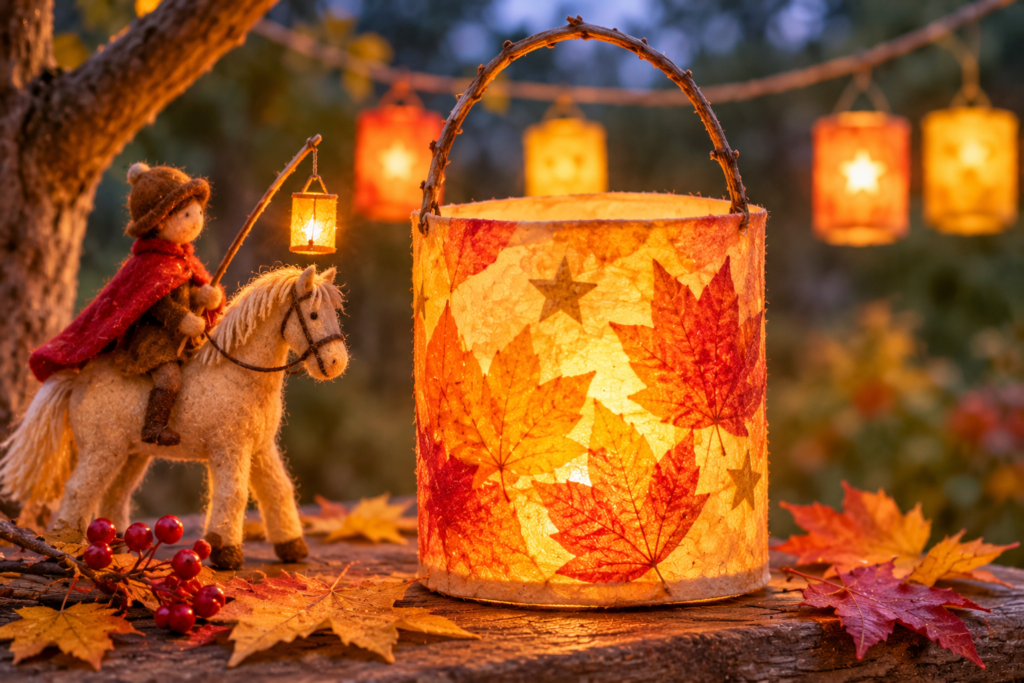
Handmade autumn lantern glowing with warm light beside a little felt horse and rider, surrounded by autumn leaves.

A little light can remind us of the warmth and kindness we can share with others.


The Gift of Giving: Martinmas and the Lantern

As November progresses, another beautiful festival appears in the Waldorf calendar: Martinmas, celebrated on November 11.

The story of Saint Martin of Tours tells of a young soldier who encountered a poor man shivering in the cold. Martin cut his own cloak in half and shared it with him.It is a simple story, but its message is powerful: sometimes the greatest gift we can offer is something we already have.

In Waldorf schools, Martinmas is often celebrated with handmade lanterns and a walk into the early evening. The small lights carried by children create a beautiful image of warmth and kindness during a time when darkness is becoming more noticeable.The lantern is more than a craft. It becomes a symbol of the light we carry and share with others.

Make Your Own Little Lantern

You will need:

  • A small glass jar or sturdy paper lantern frame.
  • Translucent colored tissue paper.
  • White glue diluted with a little water.
  • A paintbrush.
  • A handle made from wire or ribbon.

Brush a thin layer of glue onto the jar and carefully place small pieces of tissue paper over the surface. Overlap the colors to create a beautiful stained-glass effect. Once dry, add a handle and place a battery-operated tea light inside.

At home or in the classroom, turn down the lights and enjoy the gentle glow together. You might tell the story of Martin, sing a lantern song, or simply take a quiet moment to appreciate the light.

For a little extra magic, invite the children to make a lantern procession around the garden or through a safe outdoor path.

Cozy Waldorf-inspired winter preparation with natural wool, handwork, freshly baked bread, and beeswax candles.glass jar with a match

Simple seasonal activities bring warmth, creativity, and a sense of rhythm to the quieter days of the year.


As the Days Grow Shorter:

Preparing for WinterAfter the abundance of harvest comes a quieter time.In Waldorf education, the rhythm of the year helps children experience this transition gradually. The outdoor world may become quieter, but indoor life can become richer with storytelling, handwork, baking, music, and activities that bring warmth into the home and classroom.

This is a wonderful time to introduce simple activities that invite concentration and creativity. Try finger knitting with colorful wool, baking a seasonal loaf of bread, making beeswax decorations, or creating small gifts for friends and family. These activities do not need to be elaborate. Their beauty often lies in the process itself: the feel of the wool between the fingers, the scent of bread in the oven, or the satisfaction of completing something with one’s own hands.

As we approach the Advent season, many Waldorf communities begin preparing their nature tables, exploring stories of light, and creating a sense of anticipation.The transition from autumn’s abundance to winter’s quiet is not an ending. It is another part of the yearly rhythm.

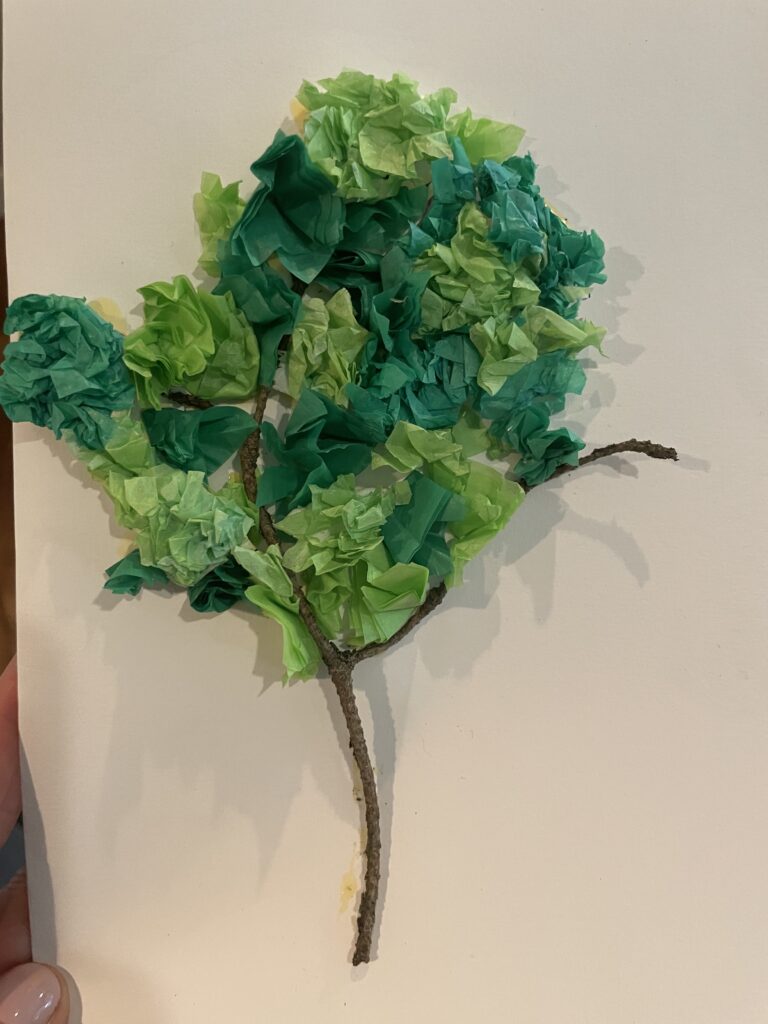
Handmade autumn gratitude tree with colorful paper leaves hanging from natural branches. 

Sometimes the smallest things give us the most reasons to be grateful.

 
A Little Challenge for This Month

Here is an idea for families and classrooms: 

Seven Days of Small Gratitudes.

For one week, take a few minutes each day to notice something worth appreciating.

  • Day 1: Find something beautiful in nature.
  • Day 2: Thank someone who helped you.
  • Day 3: Make something with your hands for another person.
  • Day 4: Share a meal or a favorite recipe.
  • Day 5: Notice something you might usually take for granted.
  • Day 6: Do a small act of kindness without being asked.
  • Day 7: Gather together and share your favorite moment of the week.

There is no need for elaborate preparations or special materials. The idea is simply to make gratitude part of everyday life.

Hand holding a woven basket filled with freshly gathered wildflowers.

A moment of beauty, a handful of flowers, and a reminder to appreciate the little things.


Carrying the Season With Us

Perhaps this is what November reminds us of most: that abundance is not measured only by what we gather, but also by what we share.

A fallen leaf, a warm meal, a handmade lantern, a helping hand, or a moment spent together can become a meaningful part of childhood.

Together, we can create meaningful moments that invite children to discover, wonder, and grow in their own time.

And as the light changes and a new season approaches, we can carry a little of that warmth with us.


            May this November bring you moments of wonder, generous hearts, and plenty of little lights to share.

One thoughtful newsletter each month. Unsubscribe anytime.


Handwork

Specialty Subjects support the teaching of main lesson in Waldorf Education.
Some of the subjects include but are not limited to:

  • Handwork. Handwork is infused into the curriculum from early childhood through grade 8.
  • Music Education. Waldorf educators have a deep appreciation for music and encourage students to appreciate music, too.
  • Physical Education.
  • Gardening
  • Art or Artistic Expression
  • Form Drawing

Grades Waldorf Curriculum and Resources from Handwork Lessons for Educators are below. Please view files and use as needed. I hope these resources can help on your lesson planning. Happy Teaching!

[integrate_google_drive id=”37″]

Dyed Easter Eggs

A fun craft to do during Easter week or anytime in the Spring. This craft is appropriate for any children ages 2+. It uses a few natural materials. It is preferable to choose a tissue paper that is colorful and strong. The colors turn out beautiful and bright.

Powered By EmbedPress

Powered By EmbedPress

Easter Chicks

This craft is very simple and fun to make with children. For the young child it is advised to have the help of an adult. Use hallowed-out eggshells and a few craft supplies to make a flock of chicks. You can begin with white eggs or dye them yellow or orange or even brown. It is sure a great way to make chickens and decorate a nest.

Powered By EmbedPress

Powered By EmbedPress

God’s Eyes

God’s Eyes are a classic craft that is soothing for children. Young children enjoy the satisfying feeling of turning the branches making colorful patterns. It is a great hobby to do along with finger knitting, especially for the kindergarten and lower grade classes.

Powered By EmbedPress

Powered By EmbedPress

Valentine’s Day Celebration

Valentine’s day origin

Valentine’s day celebration is an occasion in many countries. Where did the celebration initiate? How did it become popular? Where does the name come from?

There are different theories based on stories from many years ago. One of the legends took place long before Valentine became the patron saint of lovers or love. This legend narrates the events from a festival that was held in ancient Rome during the month of February, in honor of the great god Pan. The festival was called Lupercalia. One of the customs was to draw the names of young men and women in the form of a lottery to choose token boyfriends.

Another theory, with a closer relation to Valentine’s name, took place during the 3rd century. The Bishop of Rome, Valentine, was martyred on the eve of the Lupercalia festival. He was a man known for his kindness and chastity and eventually the festival acquired its name after him. It may have been the poet Geoffrey Chaucer who initiated the connection between Valentine’s day and romance. Around the 1370s-1380s Chaucer wrote a poem named “Parliament of Fowls”. The poem had this quote: “For this was on Saint Valentine’s Day, when every bird comes there to choose his mate.” In the 1300s writers celebrated romance between knights and noble ladies, who could not marry or were promised to other men.

The idea of a day to celebrate romance and love became popular around the 1400s. In February 14th, Valentine’s day started to be celebrated. I like the story of the Valentine’s priest and its connection to the celebration, in particular for the symbol of love and gratitude.

Saint Valentine story

The Saint Valentine story narrates:

“Saint Valentine was a priest who practiced in Rome around the third century. At that time, Emperor Claudius II ruled, who decided to prohibit the celebration of marriages for young people, because in his opinion singles without families were better soldiers, since they had fewer ties.
The priest considered the decree unfair and challenged the emperor. He secretly celebrated marriages for young lovers. Hence it has become popular that Valentine is the patron saint of lovers. Emperor Claudius found out and as Valentine enjoyed great prestige in Rome, the emperor called him to the Palace. Valentine took advantage of that occasion to promote Christianity.

Although at first Claudius II showed interest, the army and the Governor of Rome, called Calpurnio, persuaded him to get it out they way.
Emperor Claudius then gave the order to imprison Valentine. So, the officer Asterius, in charge of imprisoning him, wanted to ridicule and test Valentin. He challenged him to restore sight to his daughter, named Julia, who was born blind. Valentine accepted and in the name of the Lord, he restored her sight.
This fact convulsed Asterius and his family, who converted to Christianity. In any case, Valentine remained in prison. Eventually the weak Emperor Claudius ordered to martyr and execute Valentine on February 14, 270. On the day of his execution, he left the girl a note signed, “Your Valentine.” The young Julia, grateful to the saint, planted an almond tree with pink flowers next to his grave. Hence, the almond tree is a symbol of lasting love and friendship.”

~ Saint Valentine is the patron of couples, happy marriages, beekeepers and love.

Saint Valentine, patron of love, couples, beekeepers.


Symbols of the celebration

The element of gratitude and the theme of love remain. Flowers, red heart shapes, lace, and birds are symbols of this celebration. For children, it is the element of love and friendship in a card that keeps the enjoyment of the day. February 14 is often a Valentine’s day celebration in many primary grade classrooms. In honor of the celebration of love and friendship, children make their own cards. Often they make gifts for friends and families.

Crafts or gifts to make

I have made crafts with different class groups ranging from: felted hearts, sewing heart shaped pillows, to making cards, sun catchers, heart mobiles and more. During Valentine’s day , baking together to bring a delicious treat home was a loved activity. Our class would plan a special class excursion after school to the middle of town on Valentine’s day. The children would decorate a big tree in the center of town. Decorations were from all kinds of crafts which the class and school had made. Families would join and we would all spend some time at the near beach. Some great memories!

Sun catchers a fun craft to make with children
Craft Valentine’s day

In any way you prefer to have a Valentine’s day celebration with your loved ones, I hope it is a fun time. To help you create a nice craft or treat with your class or at home, check the following posts: craft “Sun catcher hearts” and recipe “Heart shaped sugar cookies with natural frosting”, both for all ages. Happy Valentine’s Day!

Heart Shaped Sugar Cookies Recipe

The Heart shaped sugar cookies recipe is a wonderful way to make a nice treat for Valentine’s day. You may make them just as they are for a less sugar option (with white or brown sugar). You may also glaze them with the natural color frosting suggested. Sweets and chocolates are a classic during this time in spite of our healthy habits.

If you choose to make a delicious dessert with your little ones, this heart shaped sugar cookie recipe does not fail. The frosting is made with natural ingredients. Dried strawberries make the heart shaped sugar cookie frosting color. Check the provided link to dry your own fresh strawberries.

For the frosting add butter, milk and powdered sugar. The natural color of the strawberries give a fucsia tint depending on the amount of strawberry powder. Also it could make a lighter pink adding more frosting. Enjoy the sweetness and delicious flavor of these heart shaped sugar cookies with the hint of strawberry taste. Below both recipes for the cookies and frosting.

Check out also our Valentine’s craft suggestion, suncatcher hearts! Contact us with comments or suggestions and please subscribe for additional content. You may also want to check and register to any of our memberships for continuos support.

Heart shaped sugar cookies - frosted
Frosted Heart shaped cookies for Valentine’s day

Powered By EmbedPress

Powered By EmbedPress

Suncatcher Hearts Craft

This Suncatcher Hearts craft is a simple and beautiful art appropriate for all ages. You may adjust the level of difficulty according to age and dexterity per the suggestions. You may review other suggestions for crafts or recipes in our other recent posts. Alternatively you may subscribe to receive our posts. If you need continuos material and ideas for your class, please register to one of our curriculum packages for stories, blocks, circles and more. Contact us with any questions.

Sun catchers a fun craft to make with children
Craft Valentine’s day

Powered By EmbedPress

Powered By EmbedPress

Crafting With Younger Children

Values

Gratitude is a feeling we cultivate in children since they start communicating. Prompting them to say the magic word or to be polite in their interaction with us and others are a few ways to encourage thankfulness. During a special time or a holiday, cards are a wonderful way to express our gratitude, love or caring. As we start the new year, making crafts with our children or the children we teach is fun and enhances values that will remain with them. Empathy and showing our feelings for others are part of these values that are cultivated when we make a birthday, holiday card or write a thank you note.

Fine Motor Skills

Besides being a fun activity and a wonderful way to foster good values, a craft with younger children stimulates their fine motor skills and artistic abilities. In Waldorf schools, this premise is observed in all daily activities: Academic lessons with crayon and pencil drawings, painting, crafts, foreign language lessons, circus arts, and more. Below are a couple of crafts that will bring joy to your classroom or family free time. I recommend this craft for all ages, but variations for pre-k children are suggested. I hope this brightens your crafting time.

Powered By EmbedPress

Powered By EmbedPress

Powered By EmbedPress

Powered By EmbedPress